Hydrostatic testing of pressure vessels: what buyers should expect
In a hydrostatic test the finished vessel is filled with water, pressurized above its design pressure and held there while inspectors check it for leaks and deformation. At Wanlong the test pressure is 1.25 × design pressure and the hold time is 30 minutes. Water is used because it barely compresses: if a weld fails, the pressure drops at once without releasing much stored energy.
Where the test sits in the build sequence
The hydrostatic test comes near the end. In our sequence it follows welding, NDT, heat treatment where required, machining and final assembly, and it comes before surface treatment and painting. Testing before painting leaves the welds bare, so any seepage is visible.
What happens during the test
- The vessel is filled with water and vented so that no air is trapped at high points.
- Pressure is raised in steps to the test pressure.
- The test pressure is held for the specified time: 30 minutes in our procedure.
- Inspectors check welds, nozzles, flanged joints and the shell for leaks and visible deformation.
- Pressure is released slowly, and the vessel is drained and dried.
What buyers should agree in advance
- Test pressure and hold time: confirm them in the inspection and test plan against your design code.
- Witness point: if your inspector or a third party wants to witness the test, mark it as a hold point and agree the notice period.
- Water quality: stainless steel vessels are normally tested with low-chloride water. State any limit your specification sets.
- Test position: a tall vessel tested lying down carries the weight of the water differently from service. The design should cover this.
- Gauges: ask for calibrated gauges and their calibration records.
What the report should show
The hydrostatic test report records the vessel number, test pressure, hold time, test medium, gauge details, result and signatures. It goes into the data book with the NDT reports and material records.
When water cannot be used
Some vessels cannot be filled with water, for example where the supports or the process cannot tolerate it. The design may then call for a pneumatic or combined test. This needs more safety precautions and must be specified by the designer.
How Wanlong handles it
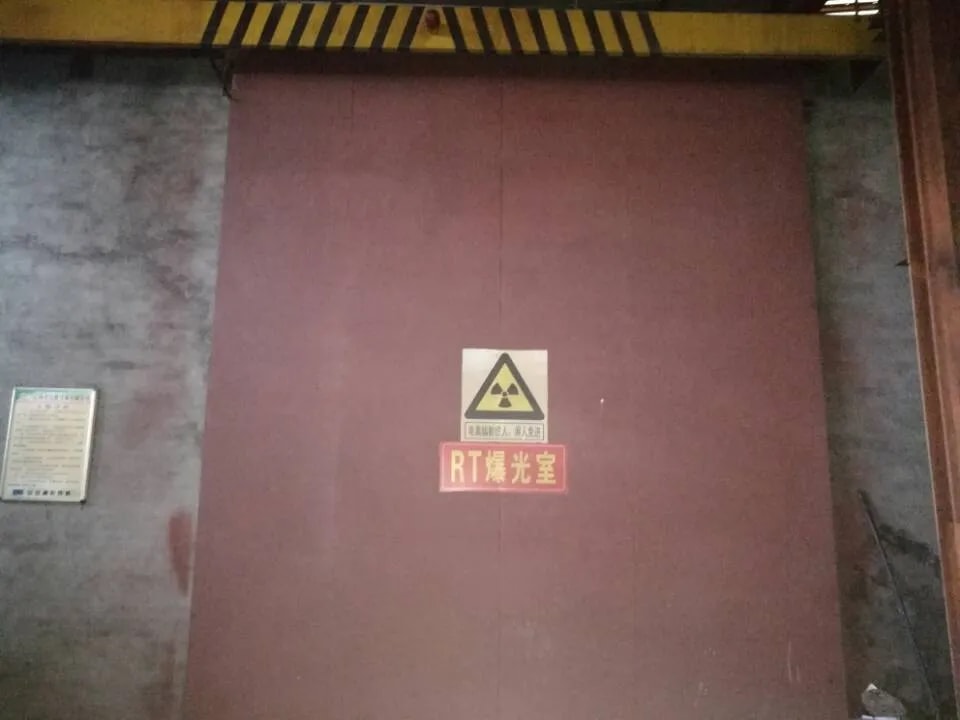
Every pressure vessel we build is hydrostatically tested at 1.25 × design pressure with a 30-minute hold, before blasting and painting. Welds are inspected first by RT, UT, MT and PT, with radiography in our own shielded RT room. The test report is part of the data book shipped with each vessel, alongside the certificate of conformity, quality certificate, MTRs, WPS/PQR records and NDT reports. Vessels are built under licence TS2236612-2027 for Class D fixed pressure vessels.
Send us the data sheet.
Tell us the medium, design pressure, temperature and quantity. An engineer replies with questions or a quotation.
- Sales contact
- Mr. Yu Jiakang
- WhatsApp / WeChat
- +86 183 1791 9067
- Factory
- No. 2666 Jinxian Avenue, High-tech Industrial Park, Jinxian Economic Development Zone, Nanchang, Jiangxi, China 331700

Pressure vessels, storage tanks, SF double-wall tanks, steel structures and skid-mounted units, fabricated in Jinxian, Jiangxi since 2003.
Jiangxi Wanlong Industrial Co., Ltd.
No. 2666 Jinxian Avenue, High-tech Industrial Park, Jinxian Economic Development Zone, Nanchang, Jiangxi, China 331700
Contact
- Mr. Yu Jiakang
- WhatsApp +86 183 1791 9067
- jiakang@wanlongindustrial.com


